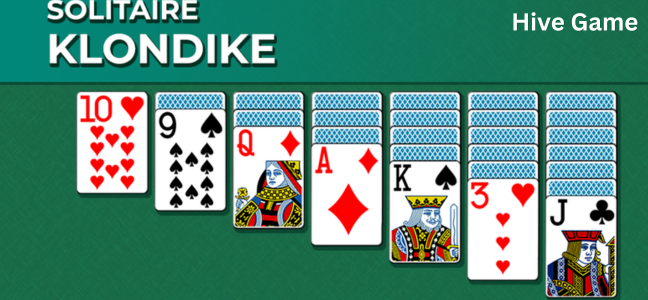

Build up four foundations by suit from Ace to King.
Welcome to Klondike Solitaire, the timeless card game that has captivated players for generations. Developed by TapLabGames, this digital version brings the classic solitaire experience to your browser with intuitive controls and authentic gameplay. The rules are simple: build four foundations, one for each suit, from Ace up to King. But mastering the game requires strategy, patience, and a bit of luck.
This comprehensive guide covers everything you need to know about Klondike Solitaire—the rules, layout, strategies for winning, common mistakes, and why this game has remained a beloved classic for over a century.
What Is Klondike Solitaire? An Overview
Klondike Solitaire is the most famous version of solitaire, known to millions as the card game that came pre-installed on Windows computers. The goal is to move all cards from the tableau (the main playing area) to the four foundation piles, sorted by suit and in ascending order from Ace to King.
Core features at a glance:
| Feature | Description |
|---|---|
| Game type | Single-player card game |
| Objective | Build four foundations by suit (Ace to King) |
| Deck | Standard 52 cards |
| Layout | Tableau (7 columns), stock, waste, foundations |
| Difficulty | Easy to learn, challenging to master |
| Platform | Browser-based, mobile compatible |
Why this game stands out:
| Differentiator | Benefit |
|---|---|
| Classic gameplay | Beloved solitaire variant |
| Simple rules | Easy to learn |
| Strategic depth | Rewards planning |
| Relaxing | No time pressure |
| Brain training | Cognitive exercise |
| Free to play | No cost to enjoy |
Who is this game for?
- Solitaire enthusiasts
- Card game lovers
- Anyone seeking relaxation
- Beginners learning card games
- Players wanting mental exercise
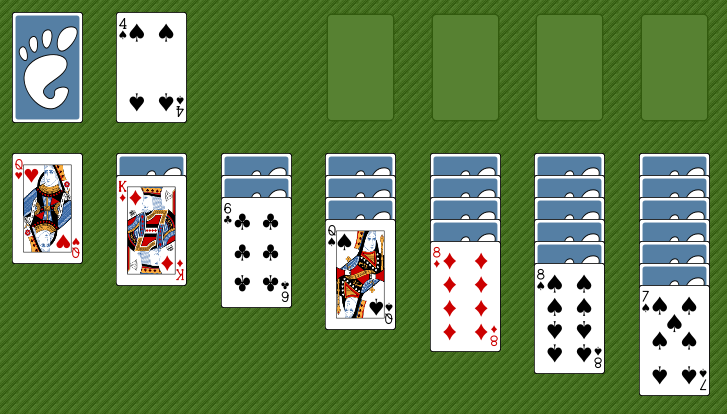
The Layout
Game Components
| Component | Description |
|---|---|
| Tableau | Seven columns of cards (1 to 7 cards) |
| Stock | Remaining cards (24 cards) |
| Waste | Cards drawn from stock |
| Foundations | Four piles (one per suit) |
Initial Tableau
| Column | Cards | Face-up |
|---|---|---|
| 1 | 1 | 1 (top) |
| 2 | 2 | 1 |
| 3 | 3 | 1 |
| 4 | 4 | 1 |
| 5 | 5 | 1 |
| 6 | 6 | 1 |
| 7 | 7 | 1 |
All other cards are face-down initially.
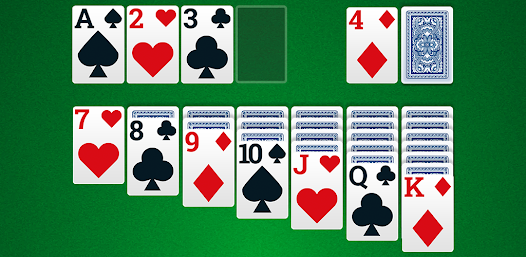
The Objective
“Build up four foundations by suit from Ace to King.”
| Foundation | Build Order |
|---|---|
| Spades | A,2,3,4,5,6,7,8,9,10,J,Q,K |
| Hearts | A,2,3,4,5,6,7,8,9,10,J,Q,K |
| Clubs | A,2,3,4,5,6,7,8,9,10,J,Q,K |
| Diamonds | A,2,3,4,5,6,7,8,9,10,J,Q,K |
Complete all four foundations to win.
Rules of Play
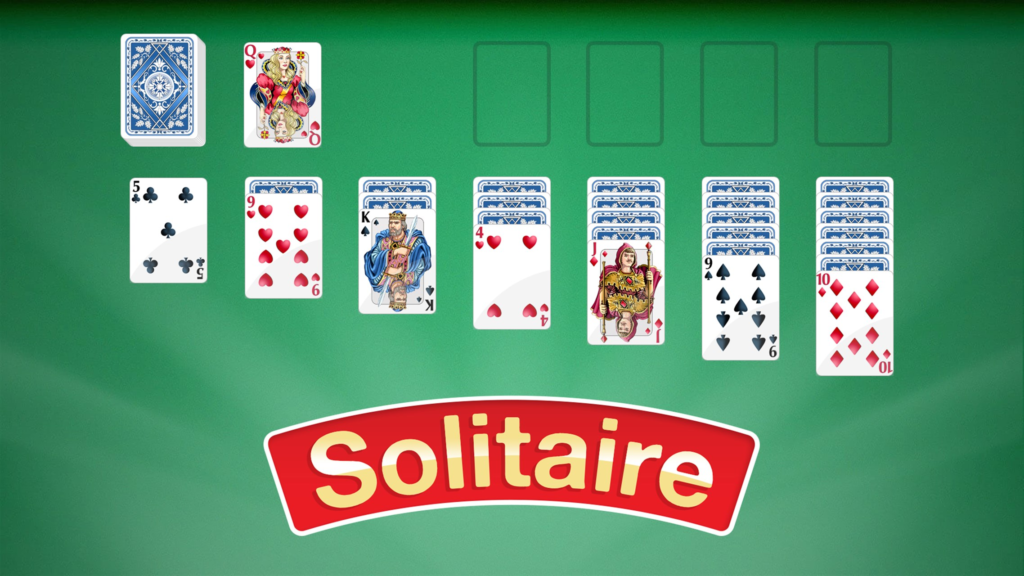
Tableau Movement
| Rule | Description |
|---|---|
| Build down | Descending order (King to Ace) |
| Alternate colors | Red on black, black on red |
| Move sequences | Can move multiple cards if in correct order |
| Empty column | Can be filled with any King or sequence starting with King |
Stock and Waste
| Draw Mode | Rule |
|---|---|
| Draw 1 | Turn over one card at a time |
| Draw 3 | Turn over three cards at a time (more challenging) |
Foundations
| Rule | Description |
|---|---|
| Build up | Ascending order (Ace to King) |
| Same suit | Only cards of matching suit |
How to Play
Step-by-Step
| Step | Action |
|---|---|
| 1 | Look for Aces in the tableau |
| 2 | Move Aces to foundations |
| 3 | Build on foundations in ascending order |
| 4 | Move tableau cards in descending, alternating colors |
| 5 | Draw from stock when no moves remain |
| 6 | Repeat until all cards on foundations |
Controls
| Action | Control |
|---|---|
| Select card | Click/tap |
| Drag to move | Click and drag |
| Double-click | Auto-move to foundation (if allowed) |
Strategies for Success
Beginner Strategies
| Strategy | Why It Helps |
|---|---|
| Move Aces immediately | Start foundations early |
| Expose face-down cards | Prioritize turning hidden cards |
| Empty columns first | Aim to clear a column |
| Use stock wisely | Don’t waste draws |
Intermediate Strategies
| Strategy | Why It Helps |
|---|---|
| Build on larger piles | Expose more cards |
| Plan multiple moves | Think ahead |
| Consider color distribution | Alternate colors strategically |
| Don’t rush foundations | Sometimes keep cards in tableau |
Advanced Strategies
| Strategy | Why It Helps |
|---|---|
| Empty columns strategically | Place Kings to open new areas |
| Sequence management | Move long sequences as units |
| Stock pattern recognition | Learn draw patterns |
| Perfect play | Maximize win rate |
Draw 1 vs. Draw 3
Draw 1
| Aspect | Detail |
|---|---|
| Difficulty | Easier |
| Win rate | Higher |
| Best for | Beginners, casual play |
Draw 3
| Aspect | Detail |
|---|---|
| Difficulty | Harder |
| Win rate | Lower |
| Best for | Experienced players, challenge seekers |
Winning Strategies
| Strategy | How It Helps |
|---|---|
| Expose face-down cards quickly | More options |
| Clear a column early | Creates King space |
| Use empty columns for sequencing | Reorganize tableau |
| Don’t fill foundations too fast | Keep options open |
| Recycle stock | Go through entire deck |
Common Mistakes
| Mistake | Consequence | Prevention |
|---|---|---|
| Moving cards randomly | Wasted opportunities | Plan ahead |
| Ignoring face-down cards | Blocked progress | Prioritize exposure |
| Filling foundations too early | Lose potential moves | Delay when beneficial |
| Not using empty columns | Missed sequencing | Utilize every empty space |
| Giving up too soon | Miss winnable games | Play through |
Is Every Game Winnable?
| Draw Mode | Winnable? |
|---|---|
| Draw 1 | Most games are winnable with perfect play |
| Draw 3 | Lower percentage, many games unwinnable |
Not every Klondike Solitaire game can be won. Part of the challenge is recognizing when to restart.
Why Play Klondike Solitaire?
For Relaxation
No timers, no pressure, play at your own pace.
For Brain Training
Exercises planning, pattern recognition, and patience.
For Nostalgia
The classic Windows solitaire experience.
For Accessibility
Simple rules, anyone can learn.
For Free, No-Download Play
Runs in browser. No installation, no account.
Klondike Solitaire vs. Other Solitaire Variants
| Variant | Key Difference |
|---|---|
| Klondike | Standard, most popular |
| Spider | Two decks, build same suit |
| FreeCell | All cards visible, free cells |
| Pyramid | Pyramid layout, sum to 13 |
Klondike remains the most recognized and played version.
Visual and Audio Design
| Element | Description |
|---|---|
| Cards | Classic design |
| Background | Clean, non-distracting |
| Animations | Smooth card movement |
| Sound | Card flip, placement sounds |
Frequently Asked Questions (FAQs)
1. Is Klondike Solitaire really free to play?
Yes, the game is completely free. You can play without spending any money. The embedded version may include occasional ads.
2. Do I need to download anything to play?
No download or installation is required. Klondike Solitaire is an HTML5 browser game that runs directly in your web browser. Just click and play.
3. Can I play on my phone or tablet?
Yes. The game is fully compatible with iOS and Android mobile devices.
4. What is the goal of Klondike Solitaire?
Build up four foundations by suit from Ace to King.
5. How do I move cards?
Click and drag cards to valid destinations. Double-click may auto-move to foundation.
6. What are the rules for tableau movement?
Build down in descending order with alternating colors (red on black, black on red).
7. What is the difference between Draw 1 and Draw 3?
Draw 1 turns over one card at a time; Draw 3 turns over three cards at a time, making the game harder.
8. Can I move multiple cards at once?
Yes, if they form a valid descending sequence with alternating colors.
9. What goes in an empty tableau column?
Any King (or a sequence starting with a King).
10. Are all Klondike games winnable?
No. Draw 1 has higher win rate; Draw 3 has lower.
11. What is the best strategy?
Expose face-down cards, clear columns, use empty spaces for sequencing.
12. How do I win?
Move all cards to the four foundations, each suit in order Ace through King.
13. Does the game have hints?
Some versions include hint features.
14. Can I undo moves?
Most versions include undo functionality.
15. Is there a time limit?
No. Play at your own pace.
16. What happens when I run out of stock moves?
The game may end, or you can restart.
17. How long does a typical game take?
5-15 minutes, depending on difficulty and luck.
18. Is Klondike Solitaire good for brain training?
Yes. It exercises planning, pattern recognition, and patience.
19. Can I play offline?
No. Internet connection required to load.
20. Why is it called Klondike Solitaire?
Named after the Klondike region of Canada (Yukon), possibly due to its popularity during the Gold Rush.
The History of Klondike Solitaire
| Year | Event |
|---|---|
| 19th century | Solitaire games become popular |
| 1990 | Included in Microsoft Windows |
| 2000s | Digital versions explode |
| Present | Still one of most played card games |
Klondike Solitaire introduced millions to computer gaming.
Conclusion: A Timeless Classic
Klondike Solitaire is more than just a card game—it is a cultural icon. The rules are simple: build four foundations by suit from Ace to King. But the strategic depth, combined with the element of luck, has kept players engaged for generations.
Whether you are killing time, relaxing after work, or exercising your brain, Klondike Solitaire offers the perfect balance of challenge and accessibility.
Key takeaways:
| Aspect | Summary |
|---|---|
| Game | Klondike Solitaire |
| Objective | Four foundations (Ace to King by suit) |
| Layout | Tableau, stock, waste, foundations |
| Movement | Descending, alternating colors |
| Difficulty | Easy to learn, challenging to master |
| Platform | Browser, mobile |
| Cost | Free |
| Verdict | Essential for solitaire fans |
Build up four foundations by suit from Ace to King. Play now.